When Sarabjit Kaur was studying engineering, a friend secretly signed her up for an impromptu speaking competition. She tried to withdraw, went on stage anyway and came third. The experience gave her a question she still asks when she doubts herself. What if I’m wrong about what I can do?
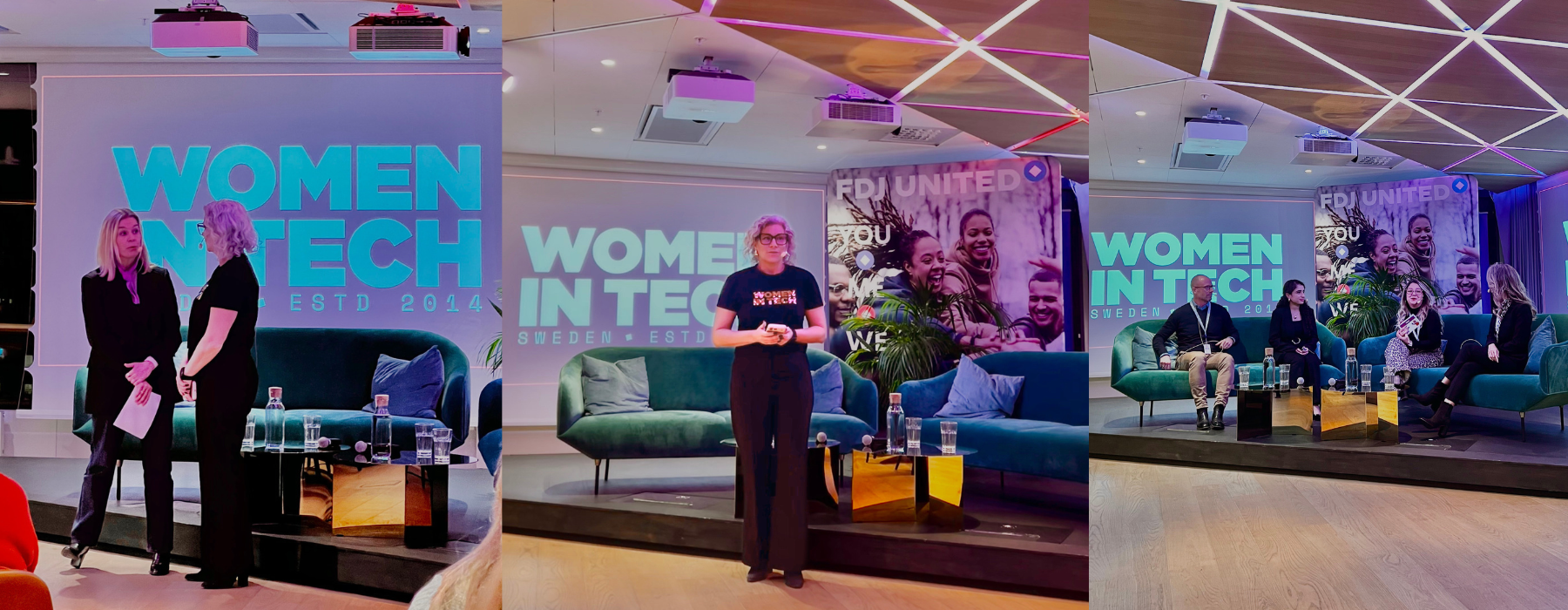
That story set up a bigger conversation at the Women in Tech Sweden meetup at FDJ United in Stockholm. Marking ten years of partnership, WIT co-founder and Managing Director Åsa Johansen and FDJ United’s Head of Sustainability Kristina Grevin opened the evening. Software developer Catarina Villalonga then led a conversation with engineering managers Mina Bahar and Sarabjit Kaur and infrastructure line manager Johan Engberg about building trust, making room for talent and leading teams through rapid change.
When Sarabjit Kaur’s team started using the AI coding tool Cursor, even experienced developers wondered what it meant for their skills and roles. The team talked openly about those concerns, then set aside innovation days to try the tool and help each other get started. Their experience showed what leaders can do while bigger questions are still open. Be clear about what you know, listen to what worries people and give the team time to learn together.
The panel also asked what happens to early-career developers when AI takes on some of the tasks they used to learn from. One idea was to have junior developers work alongside senior colleagues in an apprenticeship-style setup, where they could see how experienced developers make decisions. AI can help explain unfamiliar code, while developers still need practice checking its output and reasoning through problems themselves. If AI saves a team time, leaders can choose to put some of it back into learning, architecture and improving the user experience.
Mina Bahar asked us to imagine a release deadline approaching when an engineer raises a concern. A frustrated first reaction can make that person think twice about speaking up next time. In responsible gaming, where teams build safeguards such as deposit and time limits into the product, that response can affect which concerns get heard before a feature goes live.
The same attention matters when spotting talent. Watch who asks thoughtful questions, takes ownership or helps others learn. Then offer them a chance to lead a small initiative or present their work, even if they haven’t put themselves forward.
The evening left us with a practical question for our own teams. When someone raises a concern or hesitates to take on something new, what can we do to make their next step easier?
Thank you to FDJ United, our speakers and everyone who joined the conversation.
Insights from the panel: